
It’s easier than ever to buy CBD oil online, but state laws vary widely and can affect everything from what you can legally purchase to where you can carry it. You may live in a state where hemp-derived CBD is fully legal, or one where strict regulations limit THC content, require prescriptions, or ban CBD entirely. Understanding these differences helps you stay compliant and informed.
The Law of the Land
Federal law sets the baseline for CBD legality across the United States. The 2018 Farm Bill reclassified hemp as an agricultural commodity, removing it from the Controlled Substances Act. This change legalized hemp-derived CBD containing no more than 0.3% THC on a dry weight basis. You can now transport compliant CBD products across state lines, though individual states retain authority to impose their own restrictions.
The Farm Bill
Congress passed the Agriculture Improvement Act of 2018, commonly known as the Farm Bill, to deregulate hemp cultivation. The legislation defined hemp as Cannabis sativa L. with a delta-9 tetrahydrocannabinol concentration of not more than 0.3 percent. This distinction separated hemp from marijuana, which remains federally illegal. You benefit from this clarity when purchasing CBD products derived from legally grown hemp.
Hemp and THC Limits
The 0.3% THC threshold is a strict legal benchmark, not a rounding allowance. Any hemp plant or product exceeding this limit is classified as marijuana under federal law. You must verify lab results from reputable sources to ensure compliance. A mid-sized SaaS firm offering CBD tracking software reports frequent discrepancies in retailer-labeled THC levels.
Testing methods vary between states, and some use post-decarboxylation calculations to measure total potential THC. This process converts THCA into THC when heated, which can push a product over the legal limit even if initial tests appear compliant. You should look for certificates of analysis that specify testing methodology, especially if using CBD in states with zero-tolerance policies for psychoactive compounds.
The Open States
Some states fully permit CBD derived from hemp with no restrictions beyond federal requirements. You can legally purchase, possess, and use CBD products containing less than 0.3% THC without needing authorization. States like Colorado, Oregon, and Washington allow broad access, reflecting their progressive stance on cannabis-related products. These jurisdictions typically regulate labeling and testing but do not impose usage limits for adults.
Buying Over the Counter
Most retail locations in open states carry CBD items on their shelves alongside health supplements. You will find tinctures, gummies, and topicals in pharmacies, gas stations, and wellness shops without needing a note from a doctor. A mid-sized SaaS firm operating a chain of vitamin stores in California reported CBD as one of its top three fastest-moving categories by volume.
No Permit Required
You face no legal barrier to entry when acquiring CBD in these states, as no license or permit is necessary for personal use. Possession limits align with federal guidelines, and law enforcement generally does not prioritize CBD-related offenses. Travelers crossing into Nevada from Arizona have reported purchasing CBD oil at roadside shops without presenting identification or documentation.
State agencies in open jurisdictions often leave enforcement to federal oversight, focusing instead on product safety. You benefit from third-party testing requirements in places like Vermont, where all CBD products must display a certificate of analysis. Retailers in Alaska must list cannabinoid content clearly, ensuring transparency for every buyer.
The Medical States
Some states restrict CBD access to patients with specific medical conditions. You must have a qualifying diagnosis, such as epilepsy or multiple sclerosis, to legally obtain CBD products. States like Florida and Iowa operate under strict medical cannabis programs that include CBD-rich formulations. Your eligibility hinges on registration and approval from a licensed physician within the state’s system.
Access varies widely even among medical-only states. In Arkansas, you need a written certification and a state-issued ID card. Other states, like North Dakota, allow broader qualifying conditions but require ongoing physician oversight. You cannot purchase products over the counter, and dispensaries are the only legal source.
Doctor Notes and Rules
A doctor’s note is your gateway to CBD in medical states. You must consult a physician enrolled in the state’s program, who will assess your condition and determine eligibility. The note does not prescribe a specific dosage but certifies your qualifying diagnosis. Keep this documentation with you when purchasing or traveling with CBD.
Physicians cannot recommend CBD in the same way as traditional medications due to federal restrictions. Instead, they issue certifications recognized under state law. In Louisiana, for example, only certain neurologists can approve patients for CBD use. Your doctor must renew the certification annually, and some states require in-person visits each time.
Low THC Limits
Many medical states enforce strict THC thresholds, often capping levels at 0.3% or lower. You can only use CBD products that fall within this limit, typically derived from hemp or specially cultivated cannabis plants. Exceeding the threshold classifies the product as marijuana, which remains illegal under state medical programs.
States like Missouri and Oklahoma allow higher CBD concentrations but still restrict THC to trace amounts. You must verify lab results for every product, as some extracts may unintentionally exceed limits. Labels often state “THC-free” but independent testing sometimes reveals otherwise, putting you at legal risk.
Lab testing plays a critical role in compliance with low THC limits. You are responsible for reviewing certificates of analysis from accredited facilities, which confirm cannabinoid content. A mid-sized SaaS firm managing medical cannabis compliance reported that over 20% of submitted CBD products initially failed state THC thresholds due to inconsistent manufacturing. Always choose brands that provide batch-specific, transparent lab data accessible by QR code or website.
The Forbidden Zones
Some states maintain near-total prohibitions on CBD products regardless of THC content. Idaho, for instance, only permits CBD derived from extracted THC-free hemp isolates under strict conditions, effectively banning most consumer products. Kansas restricts CBD to FDA-approved drugs or products with no detectable THC, leaving little legal room for standard tinctures or edibles. These states represent the most restrictive end of the spectrum, where possession could lead to criminal charges even with minimal psychoactive compounds.
Strict Local Bans
A handful of counties and municipalities enforce bans beyond state law, often in areas where state policy permits limited use. Local ordinances in certain rural jurisdictions may prohibit sale or possession despite state allowances, creating legal blind spots. You risk penalties if stopped with a product deemed illegal under county code, even if it complies with state hemp regulations. Always verify local codes before transporting or using CBD in regions with patchwork enforcement.
Legal Risks
Carrying CBD in a forbidden zone exposes you to potential seizure, fines, or criminal records depending on jurisdiction. Law enforcement may not distinguish between hemp-derived CBD and marijuana during traffic stops, especially if packaging is unclear. A mid-sized SaaS firm employee was detained in western Kansas for possessing a legally purchased CBD tincture from Colorado, highlighting how interstate travel amplifies exposure. Ambiguous labeling increases the chance of mistaken identity in regions with zero tolerance.
Law enforcement training often lags behind evolving hemp laws, leaving officers reliant on field tests that cannot differentiate CBD from THC. You may face temporary arrest even if charges are later dropped, and legal defense costs can accumulate quickly. Some prosecutors treat any cannabis-related compound as contraband in strict jurisdictions, regardless of federal hemp legality. This discrepancy between federal allowances and local enforcement creates tangible personal risk.
Buying the Right Oil
Reading the Lab Report
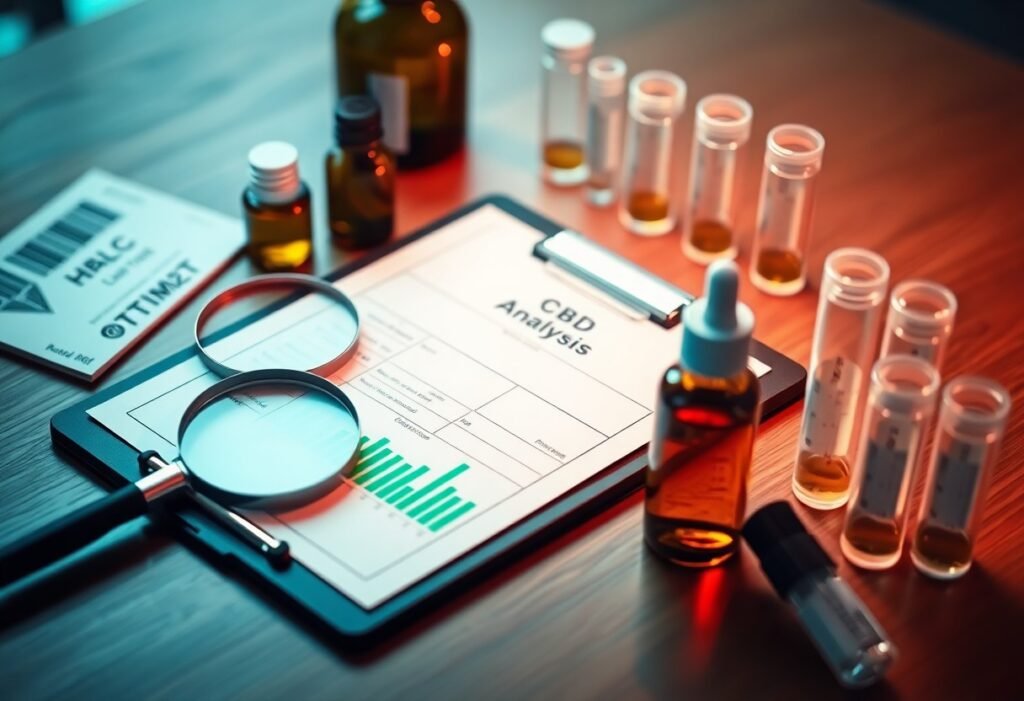
Every reputable CBD product comes with a certificate of analysis from a third-party lab. You can access this report via a QR code or URL printed on the packaging.
Lab results verify cannabinoid content, confirming the amount of CBD and ensuring THC levels stay below 0.3%. They also screen for pesticides, heavy metals, and microbial contaminants, giving you transparency about what’s in the bottle.
Clean Product Standards
Look for oils made with organically grown hemp, especially when the extract is intended for daily use. Clean standards mean no synthetic additives, artificial flavors, or thinning agents like propylene glycol.
Manufacturers following current Good Manufacturing Practices (cGMP) provide a higher degree of consistency and safety. A mid-sized SaaS firm auditing supplement brands found cGMP-certified products had fewer labeling inaccuracies.
Some brands go further by using CO2 extraction, a method that avoids harsh solvents and preserves the integrity of cannabinoids. This process, combined with organic certification and glass packaging to prevent leaching, defines the current benchmark for purity.
Moving Across Borders
Transporting CBD across state lines introduces legal variables beyond your point of origin. Federal law permits hemp-derived CBD containing less than 0.3% THC, yet state enforcement practices differ. A product legal in one state may trigger scrutiny in another, especially in states with strict cannabis regulations.
Law enforcement officers may not distinguish between hemp and marijuana during routine checks. Carrying CBD without proper labeling increases the risk of confusion or confiscation. Always verify the CBD laws of both your departure and destination states before travel.
Flying with Bottles
Air travel with CBD is generally permitted if the product meets federal guidelines. The Transportation Security Administration allows liquids under 3.4 ounces in carry-ons, so transfer larger bottles to checked luggage. Ensure the bottle is clearly labeled with CBD content and hemp origin to avoid delays.
Some airports are located near states with restrictive cannabis laws, and crossing jurisdictional boundaries during transit can complicate matters. A traveler once reported a CBD tincture being confiscated at a layover in a state where THC thresholds are lower. Stick to TSA-compliant containers and keep receipts handy.
Driving the Highway
Highway patrol stops can turn routine CBD possession into an unexpected legal issue. Officers in states that ban CBD may treat your product as a controlled substance, regardless of federal legality. Carrying a lab-tested certificate of analysis helps demonstrate compliance with THC limits.
State borders are not marked with CBD law signposts, and rural jurisdictions may enforce regulations more strictly. A driver transporting CBD oil from Colorado to Kansas was briefly detained when officers misidentified the product as marijuana. Always research沿途 state laws and avoid unmarked containers.
Driving through multiple states demands extra caution due to differing enforcement priorities. Some states classify even trace THC in CBD products as illegal, exposing travelers to fines or arrest. A mid-sized SaaS firm’s employee faced a two-hour detention after state troopers found a full-spectrum CBD tincture during a traffic stop in Idaho. Preemptive verification of each state’s stance minimizes risk.
Summing up
CBD laws vary widely across the U.S., and your ability to purchase or possess it depends entirely on where you live. In some states, you can buy CBD oil over the counter without any restrictions, while others require a medical prescription or prohibit it altogether. You must verify your state’s current stance, especially if you plan to travel with the product, as crossing state lines with CBD-even if legal in both locations-can lead to legal complications under federal law. A patient in Oklahoma, for instance, might legally use CBD for chronic pain but face penalties driving through Texas with the same bottle.
Your responsibility includes staying informed about local regulations and sourcing products that meet federal THC limits. Reputable vendors provide third-party lab results, ensuring transparency and compliance. You should always review certificates of analysis before purchasing, particularly if you live in a state with strict cannabis laws. As legislation continues shifting, your awareness of updates in states like Missouri or South Carolina could prevent unintended legal risks. Clarity comes from checking official state health department resources, not anecdotal advice.