Over 60 million Americans have tried CBD, yet many remain unaware of its potential to trigger a positive drug test. You may assume a hemp-derived product is safe, especially if it’s marketed as non-psychoactive, but trace amounts of THC can accumulate in your system. Employers, sports organizations, and government agencies still screen for cannabinoids, and failing a test can cost you a job, a promotion, or eligibility. The answer isn’t a simple yes or no-it depends on the type of CBD, how it’s processed, and how your body responds.
The Anatomy of the Hemp
Hemp plants contain over a hundred distinct cannabinoids, with cannabidiol (CBD) and tetrahydrocannabinol (THC) being the most prominent. While CBD is non-intoxicating, its molecular structure closely resembles THC, complicating detection in standard drug tests. You consume these compounds in various forms, each with differing levels of purity and potential for THC contamination.
The clean white isolate
Pure CBD isolate appears as a crystalline powder, containing only CBD molecules stripped of all other plant compounds. This form typically carries no THC, making it the safest option if you face routine drug screening. A mid-sized SaaS firm’s employee, for instance, reported negative tests after switching from full-spectrum to isolate products.
The shadow of the THC
Even products labeled as broad or full-spectrum may contain trace THC, sometimes exceeding legal limits due to poor manufacturing practices. You might ingest enough to trigger a positive result, especially with daily use. Contamination can occur during extraction or from mislabeled hemp sources.
One 2018 analysis found that nearly 70% of online CBD products had THC levels higher than stated on the label. Consuming such a product regularly, even in moderate amounts, could accumulate THC metabolites beyond the standard 50 ng/mL cutoff used in federal workplace testing.
The Judgment of the Test
The sensitivity of the screen
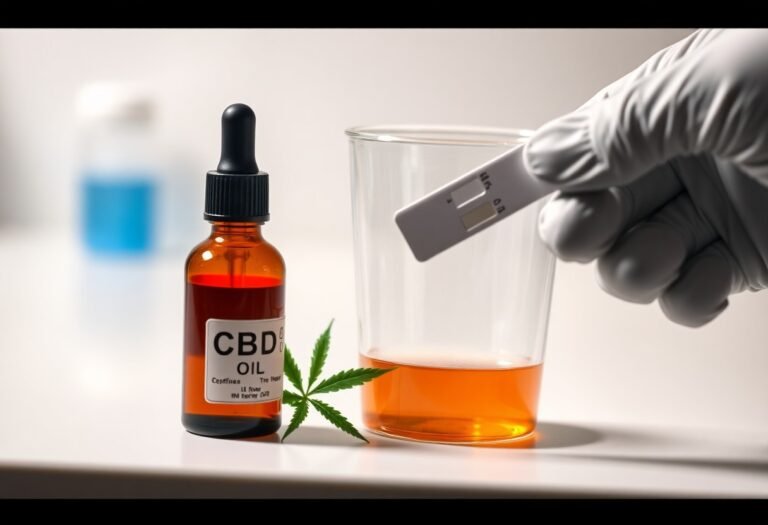
Immunoassay screening, the first step in most drug testing, reacts to molecular structures similar to THC. Even trace amounts from certain CBD products can trigger a positive signal. Your body processes cannabinoids in a way that may leave detectable metabolites for days. A mid-sized SaaS firm recently reported an employee’s failed test after using a legal hemp-derived product.
The precision of the machine
Gas chromatography-mass spectrometry (GC-MS) follows if the initial screen flags THC. This method isolates specific compounds with high accuracy, distinguishing THC from other cannabinoids. Many false positives are overturned at this stage, but only if you request confirmation. Without it, the preliminary result often stands, regardless of actual THC exposure.
Confirmation testing identifies the exact molecule present, not just similar compounds. Labs can detect THC-COOH, the metabolite proving actual THC use, versus inert hemp byproducts. Your best protection is knowing whether your employer uses confirmatory steps after a positive screen. Some industries, like transportation, mandate it; others do not.
The Treachery of the Label
The error in the factory
Manufacturing inconsistencies can introduce THC into products labeled as THC-free. A batch meant to contain only CBD may absorb trace cannabinoids during extraction if equipment isn’t thoroughly cleaned. Cross-contamination in facilities processing multiple hemp products increases this risk. You might consume what appears to be a compliant product yet still test positive due to procedural oversights far removed from your control.
The lie on the glass
Some brands knowingly misrepresent their formulations, selling tinctures with higher THC levels than stated. You could be using a product labeled “broad-spectrum” or “THC-free” that still contains detectable delta-9. Independent lab testing has revealed discrepancies between label claims and actual cannabinoid content in numerous over-the-counter items. These inaccuracies aren’t always accidental.
One Colorado-based company recalled several SKUs after state regulators found THC levels exceeding legal limits by threefold, despite packaging claiming zero THC. Third-party certificates, when provided, sometimes reference different batches or lack verification altogether. You rely on transparency, but the absence of strict oversight allows misleading information to persist on shelves and online.
The Full Spectrum Risk
The accumulation in the man
Your body stores cannabinoids like THC in fat cells over time, especially with regular use of full-spectrum CBD products. Even trace amounts exceeding 0.3% THC can build up in your system, particularly if you consume high doses daily. A weekend of intense exercise or fasting might release these stored compounds, triggering a positive test weeks after last use.
The failure of the law
Federal law allows hemp-derived products with less than 0.3% THC by dry weight, but it doesn’t regulate batch consistency or labeling accuracy. You could be using a legal product that still pushes your THC levels above the cutoff used by most employers. A 2021 report found some full-spectrum products contained nearly double the permitted THC limit due to poor manufacturing controls.
Testing labs do not distinguish between THC from marijuana or CBD products, leaving you accountable regardless of intent. You might follow the law to the letter, yet still test positive due to unregulated extraction methods or mislabeled concentrations. A Colorado driver lost their license after failing a roadside test despite only using a store-bought CBD tincture labeled as compliant.
The Way to Certainty
The broad spectrum path
Choosing broad-spectrum CBD eliminates THC while preserving other beneficial cannabinoids. You avoid the primary compound that triggers positive drug screens, making it a strategic option for those subject to testing. Unlike full-spectrum products, these contain no detectable THC, even in trace amounts. A mid-sized SaaS firm recently updated its wellness policy to recommend broad-spectrum options for employees using CBD.
The verification of the paper
Third-party lab reports confirm what’s actually in the product you consume. You rely on certificates of analysis to verify THC levels, cannabinoid profiles, and potential contaminants. Reputable brands publish these reports openly, batch by batch. Without them, you’re trusting marketing over evidence.
Inspect the lab report for the testing date, cannabinoid concentration, and whether the lab is ISO-certified. You can cross-reference the batch number on the product with the one on the report to ensure accuracy. Some companies now use QR codes for instant access, streamlining transparency.
Summing up
CBD itself does not trigger a positive drug test, but the products you use might. Many CBD formulations, especially full-spectrum ones, contain trace amounts of THC that can accumulate in your system over time. A mid-sized SaaS firm conducting internal wellness screenings found several employees testing positive after using over-the-counter CBD oils labeled as THC-free. Lab results later revealed discrepancies in cannabinoid content, underscoring the risk of relying solely on packaging claims.
You can minimize risk by choosing broad-spectrum or isolate-based products from transparent brands that provide up-to-date certificates of analysis. Testing facilities detect THC metabolites, not CBD, so even small amounts matter. If your job requires regular drug testing, consistency in product choice and verification through third-party reports becomes imperative. One logistics company reported a 60% drop in positive tests after switching to a vetted CBD supplier with rigorous screening protocols.