It’s common to confuse CBD and THC, given both originate from the cannabis plant and are frequently discussed in conversations about natural wellness. You encounter them in oils, tinctures, and edibles, often marketed for relief without fully explaining how they differ. While they share a chemical backbone, your body responds to each in distinctly different ways, influencing everything from mood to muscle tension. This piece clarifies what sets them apart and where they overlap, so you can make informed decisions based on science, not speculation.
Atomic Structure
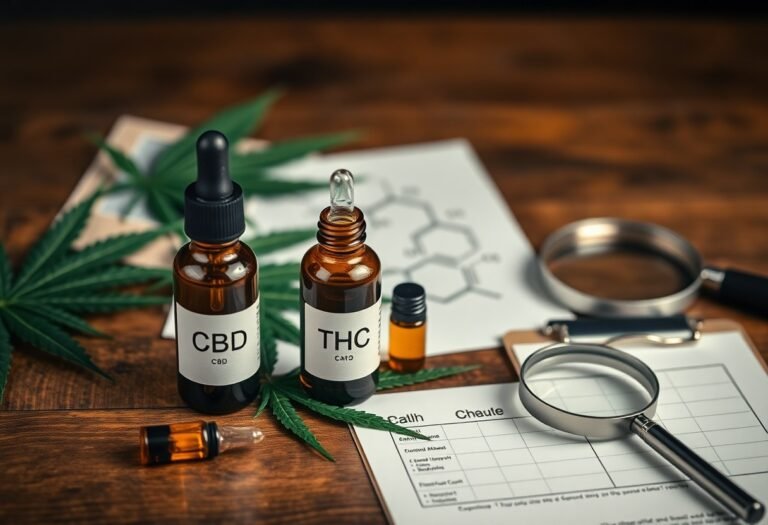
Your understanding of CBD and THC begins at the molecular level, where both compounds share the same chemical formula-C₂₁H₃₀O₂-but differ in atomic arrangement. This slight variation in structure alters how each compound interacts with your endocannabinoid system, particularly the CB1 and CB2 receptors.
A single shift in the placement of a double bond distinguishes THC’s cyclic ring from CBD’s open-chain configuration. This structural nuance explains why THC binds directly with CB1 receptors in the brain, while CBD exerts indirect influence, modulating receptor activity without producing intoxication.
Mental Impact
CBD influences your mental state without inducing intoxication, allowing you to remain alert and focused. Unlike THC, it does not bind strongly to CB1 receptors in the brain, which means it won’t alter your perception, mood, or cognition in the pronounced way associated with cannabis highs. A mid-sized SaaS firm employee using CBD oil during work hours may notice reduced anxiety without impairment, maintaining productivity.
THC, by contrast, activates CB1 receptors directly, often resulting in euphoria, altered time perception, or short-term memory disruption. You might experience heightened sensory input or mild hallucinations, especially at higher doses. Recreational users frequently seek these psychoactive effects, while others may find them unsettling or counterproductive to daily tasks.
Legal Realities
State laws may permit THC for medical or recreational use, yet it remains classified as a Schedule I substance under federal law, creating complex compliance challenges. You could legally purchase a THC product in one state and face federal penalties transporting it across state lines, even to another where it’s also legal. This contradiction affects everything from banking to employment, particularly for those in federally regulated industries.
CBD derived from hemp containing less than 0.3% THC is federally legal under the 2018 Farm Bill, but the FDA still restricts its addition to food or dietary supplements. You might find CBD-infused lotions or tinctures widely available, yet companies risk enforcement actions if they make unapproved health claims. A mid-sized SaaS firm offering wellness platforms recently revised its content policies to avoid violating these ambiguous regulations.
Physical Benefits
CBD may help reduce inflammation and support recovery after physical exertion, making it a common addition to topical creams and post-workout supplements. A mid-sized SaaS firm conducting employee wellness trials reported improved mobility in participants using CBD-infused balms over a six-week period.
THC also contributes to physical relief by interacting with pain pathways, often providing stronger symptom reduction for chronic conditions like neuropathy or muscle spasticity. Patients undergoing treatment for multiple sclerosis have noted decreased muscle stiffness when using THC under medical supervision.
Known Risks
Cannabidiol is generally well tolerated, yet you may experience fatigue, dry mouth, or changes in appetite with higher doses. Some individuals report diarrhea after prolonged use, particularly when taking full-spectrum CBD products. Interactions with prescription medications such as blood thinners or antidepressants can occur, so consulting your healthcare provider before starting a regimen is necessary if you are on other drugs.
Tetrahydrocannabinol carries a higher risk profile, especially at elevated doses. Anxiety, paranoia, and short-term memory disruption are commonly reported, particularly in novice users. Long-term, heavy use has been associated with cognitive impairments in adolescent populations, though findings vary across studies. You should also consider that frequent THC use may affect motivation or exacerbate underlying psychiatric conditions in predisposed individuals.
Conclusion
CBD and THC share a molecular foundation yet diverge significantly in effect, legality, and application. You experience CBD as non-intoxicating, often used for its calming and anti-inflammatory properties, while THC produces a psychoactive high linked to euphoria and altered perception. Legal access to CBD is broader in many regions, especially when derived from hemp with less than 0.3% THC. A mid-sized SaaS firm using wellness benefits might offer CBD education, reflecting its growing workplace acceptance, whereas THC remains restricted in most professional environments.
Your choice between the two depends on individual health goals, legal access, and sensitivity to psychoactive effects. CBD oils, gummies, and topicals are widely available over the counter, while medical cannabis programs regulate THC distribution in approved states. Both compounds interact with the endocannabinoid system, but their outcomes differ-CBD may ease anxiety without impairment, whereas THC can relieve chronic pain but may trigger paranoia in high doses. Understanding these distinctions ensures informed, responsible use aligned with your personal needs and local laws.