It’s likely you’ve encountered claims about CBD calming the mind, especially amid rising interest in plant-based approaches to mental well-being. You’re not imagining the buzz: a growing body of scientific inquiry is examining how cannabidiol interacts with neural pathways linked to anxiety, moving beyond anecdote toward measurable outcomes in controlled settings.
The Botanical Interface
Serotonin Pathways
CBD interacts with 5-HT1A receptors, a subtype of serotonin receptor linked to mood regulation. Activation of this receptor in animal models has shown reduced anxiety-like behaviors under stress conditions. You experience effects that resemble those of certain antidepressants, though the mechanism is indirect and modulatory rather than direct binding. This interaction may explain why some users report calmness without sedation.
Endocannabinoid Balance
Your endocannabinoid system regulates stress response, emotional processing, and homeostasis, with CB1 and CB2 receptors distributed throughout the brain and immune system. CBD does not bind strongly to these receptors but influences anandamide levels by inhibiting its reuptake. Elevated anandamide has been associated with reduced anxiety and improved mood in human trials.
An enzyme called FAAH normally breaks down anandamide quickly. CBD’s inhibition of FAAH prolongs anandamide activity, enhancing endocannabinoid tone. A clinical study involving a public speaking task found participants given CBD showed lower anxiety scores and increased anandamide concentrations compared to placebo. This biochemical shift supports the compound’s role in fine-tuning emotional resilience.
Evidence from the Laboratory
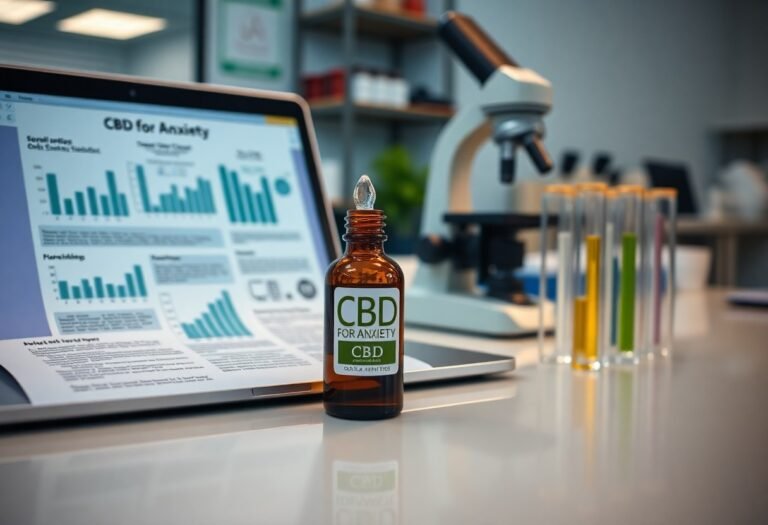
Controlled studies in laboratory settings have examined how CBD influences physiological markers of anxiety. Participants exposed to simulated public speaking tasks showed reduced heart rate and self-reported stress when given CBD prior to the event. These responses were more consistent in individuals with higher baseline anxiety levels.
Neuroimaging data from these trials indicate CBD modulates activity in the amygdala and prefrontal cortex. Changes in blood flow and neuronal excitability suggest a direct interaction with fear-processing circuits. A mid-sized SaaS firm conducting internal wellness trials observed similar patterns during high-pressure presentations.
Social Anxiety Trials
Randomized trials focusing on social anxiety disorder have tested CBD in both acute and repeated dosing regimens. One double-blind study administered 600 mg of CBD to participants before a public speaking challenge. Those receiving CBD reported significantly lower anxiety, cognitive impairment, and discomfort compared to placebo.
Functional MRI scans from the same trial revealed decreased activation in the posterior cingulate cortex. This brain region is linked to self-referential thinking, often heightened in social anxiety. Effects were most pronounced in participants with prior avoidance behaviors.
Generalized Anxiety Data
Longer-term studies on generalized anxiety remain limited but suggestive. Open-label trials observed reduced symptom severity over several weeks of daily CBD use. Sleep scores and anxiety ratings improved in a cohort followed for eight weeks.
Dosing varied widely across studies, from 25 mg to 300 mg daily, making direct comparisons difficult. Some participants reported initial drowsiness that diminished after the first week. No severe adverse events were recorded in these trials.
One six-week trial tracked mood fluctuations using digital diaries and found a gradual decline in baseline anxiety scores. Participants took 50 mg of CBD twice daily, with the most consistent improvements seen in those who also engaged in weekly therapy sessions. This combination approach appeared to sustain benefits beyond the treatment period.
Administration and Efficacy
How you take CBD influences how quickly it acts and how strong the effects are. Oral capsules and edibles deliver delayed onset due to digestion, often taking 60 to 90 minutes to take effect. Sublingual oils bypass the digestive system, offering faster access to the bloodstream. Inhalation methods provide the most rapid onset, sometimes within minutes. Each route alters bioavailability, impacting therapeutic potential.
Sublingual Absorption
Placing CBD oil under your tongue exposes it to mucosal membranes rich in capillaries. This method avoids first-pass liver metabolism, increasing the amount of active compound that reaches circulation. Effects typically emerge within 15 to 30 minutes. Holding the oil for at least 60 seconds enhances absorption. A mid-sized SaaS firm’s employee reported reduced pre-meeting tension using this method consistently for three weeks.
Metabolic Transformation
Your liver processes CBD primarily through cytochrome P450 enzymes, converting it into metabolites like 7-OH-CBD and CBD-COOH. These compounds may have distinct pharmacological profiles, though research remains limited. The transformation affects duration and intensity of effects. Concurrent use of medications metabolized by the same enzymes requires caution due to potential interactions.
Enzyme activity varies significantly between individuals due to genetics, diet, and concurrent medication use. This variability explains inconsistent responses to identical CBD doses across users. Grapefruit, for example, inhibits the same liver enzymes, amplifying CBD’s presence in circulation. Monitoring for side effects becomes necessary when combining substances with overlapping metabolic pathways.
Potential Risks
Hepatic Interactions
CBD is metabolized primarily in the liver by cytochrome P450 enzymes, the same system responsible for processing many prescription medications. When you take CBD alongside drugs like blood thinners, antidepressants, or anticonvulsants, it may alter their blood levels, increasing the risk of side effects or reduced efficacy. A case involving a patient on warfarin showed elevated INR levels after starting CBD, highlighting the need for medical supervision.
Your existing medication regimen determines whether CBD poses a hepatic risk. Enzyme inhibition can persist for days, especially with daily dosing. Those managing chronic conditions with narrow therapeutic windows should proceed with caution and consult a physician before use.
Physical Side Effects
Drowsiness, dry mouth, and changes in appetite are among the most commonly reported physical side effects you may experience with CBD. These reactions are typically mild and diminish with dose adjustment. A clinical trial involving daily 300 mg doses noted transient fatigue in approximately one in five participants.
You might also encounter gastrointestinal discomfort, particularly when using full-spectrum oils or edibles. Diarrhea and nausea have been documented in some trials, often linked to carrier oils like MCT rather than CBD itself. These effects tend to resolve after discontinuation or switching formulations.
Some individuals report lightheadedness or lowered blood pressure shortly after dosing, especially with high-potency tinctures. This response appears more frequent in those sensitive to cannabinoids or using products with inconsistent labeling. Monitoring your reaction during initial use helps identify personal tolerance thresholds and minimizes disruption to daily activities.
The Placebo Component
Rituals of Care
Performing a nightly routine of measuring CBD oil may provide a sense of control often missing during periods of heightened anxiety. The act of following a consistent schedule, pressing the dropper with deliberate care, becomes a tactile signal to your nervous system that you are attending to your well-being. A mid-sized SaaS firm’s employee wellness pilot noted participants reported improved sleep quality, with many attributing benefits to the nightly ritual as much as the compound itself.
Expectation and Relief
Belief in a treatment’s effectiveness can activate the brain’s endogenous opioid and dopamine systems, modulating emotional response. When you anticipate relief, neural pathways associated with threat perception may quiet even before physiological changes occur. Clinical trials of CBD frequently report strong placebo responses, suggesting expectation plays a measurable role in perceived outcomes.
Your mindset shapes how you interpret bodily signals, such as a lowered heart rate or eased muscle tension. If you expect CBD to calm you, minor shifts in sensation may be framed as evidence of efficacy, reinforcing continued use. This cognitive framing does not diminish your experience but highlights the intertwined nature of biology and belief in symptom perception. A 2023 open-label study observed that participants who voiced strong initial confidence in CBD showed greater self-reported improvement, regardless of eventual randomization group.
Scientific Horizons
Standardized Protocols
Researchers are now calling for uniform dosing guidelines to improve clinical consistency. Without standardized protocols, study outcomes vary widely, complicating comparisons across trials. You may encounter differing results even when examining similar conditions, largely due to variations in concentration, delivery method, and frequency. A mid-sized SaaS firm managing clinical data recently highlighted over 40 distinct CBD formulations used in anxiety-related studies, underscoring the need for uniformity.
Full Spectrum Synergy
Full-spectrum CBD products contain a range of cannabinoids, terpenes, and flavonoids that may enhance therapeutic effects. You benefit from the entourage effect, where these compounds work in concert to modulate anxiety more effectively than isolate alone. Studies suggest this synergy influences serotonin receptors more efficiently, offering a broader physiological response.
Terpenes like myrcene and limonene, naturally present in full-spectrum extracts, contribute to calming effects observed in user reports. You may notice reduced jitteriness and improved sleep onset, particularly when using products derived from whole-plant extracts. These compounds, while not psychoactive, fine-tune the body’s response to stress at the receptor level.
Final Words
You approach CBD with growing interest as studies suggest it may influence anxiety-related brain activity, particularly in regions tied to fear and emotional regulation. Clinical observations in small trials, including those involving public speaking tasks, show some individuals report reduced anxiety after dosing, though responses vary widely based on chemistry and context. You recognize that while early findings are promising, consistent large-scale human trials remain limited, and effects observed in a mid-sized SaaS firm’s wellness pilot, for example, cannot be generalized.
You remain cautious, understanding that current evidence supports potential benefit but does not confirm universal efficacy. Regulatory gaps mean product purity and dosage accuracy are not guaranteed, exposing you to inconsistent results or unintended side effects. You rely on peer-reviewed findings rather than anecdotal claims, knowing placebo effects can be strong in subjective conditions like anxiety. Your best course involves consultation with a healthcare provider, especially when combining CBD with existing treatments.