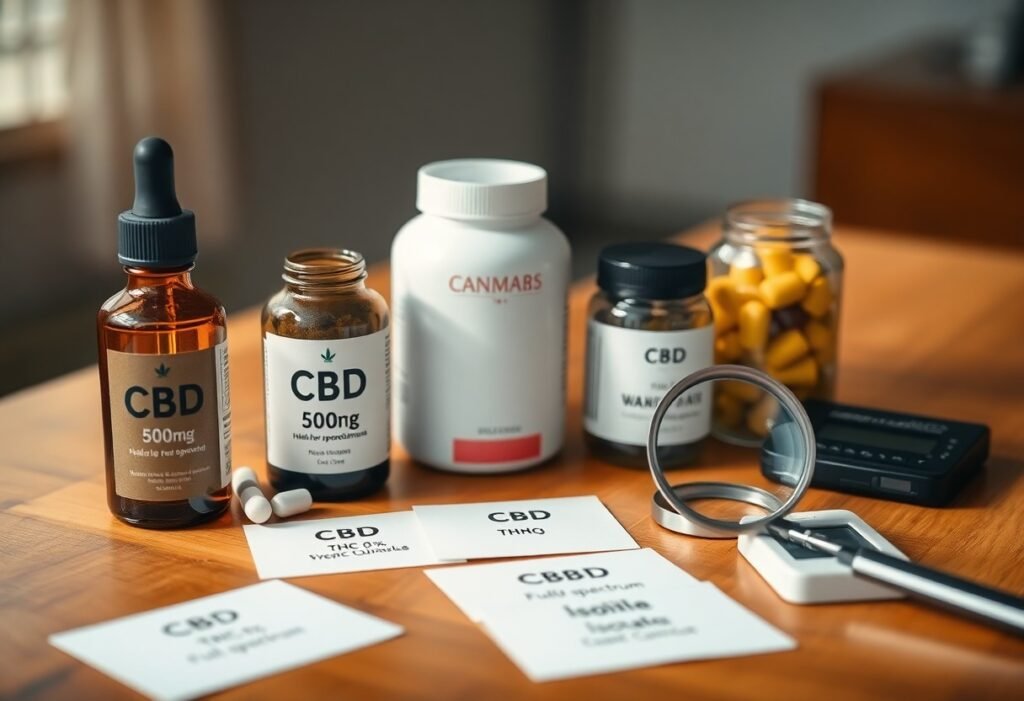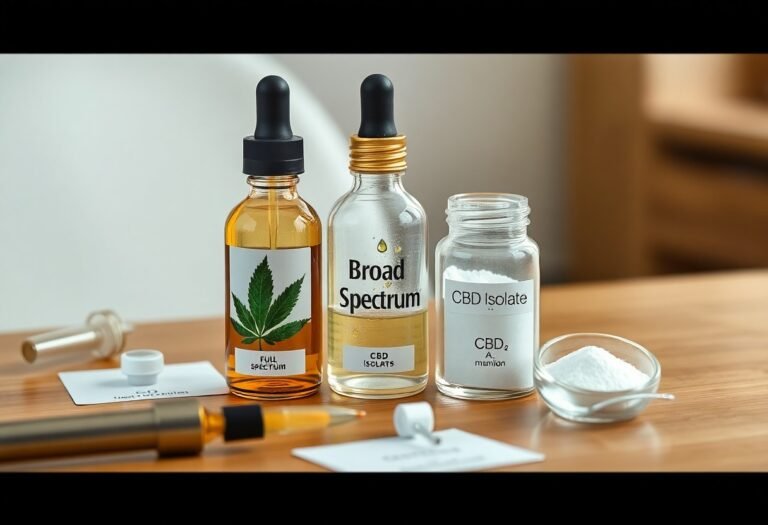
It’s easy to feel overwhelmed when standing in front of a shelf lined with CBD oils, each labeled full spectrum, broad spectrum, or isolate. You’re not choosing just a product but a specific composition of cannabinoids, terpenes, and legal considerations that directly influence how it works in your body. Understanding the differences shapes your experience.
The Pure Molecule of Isolate
Clean and Concentrated
You encounter CBD isolate when all other plant compounds have been removed, leaving behind a 99% pure cannabidiol crystal. This form appeals to those who want to avoid even trace cannabinoids or who are subject to regular drug testing. A laboratory technician might use this isolate to formulate precise dosages in clinical settings.
What You Control
You determine exactly how much CBD enters your system, with no influence from terpenes or minor cannabinoids. This precision benefits individuals tracking dosage response, such as those managing sleep patterns or occasional discomfort. A mid-sized SaaS firm’s wellness program might distribute isolate-based tinctures to ensure consistent employee experiences.
The Middle Way of Broad Spectrum
Broad spectrum CBD offers a balanced alternative by retaining multiple beneficial cannabinoids and terpenes while removing THC. You still gain access to the entourage effect, though in a more limited form, making it suitable if you want to avoid even trace amounts of THC for legal or personal reasons. A mid-sized SaaS firm with remote employees in multiple states might choose this option to ensure compliance across jurisdictions.
Manufacturers achieve this profile through precise extraction and refinement processes that selectively remove THC without stripping all other compounds. You’ll find broad spectrum oils, tinctures, and capsules increasingly common in retail and online markets, often labeled with third-party test results confirming zero THC. This transparency supports informed decisions without sacrificing product complexity.
The Whole Plant of Full Spectrum
Full spectrum CBD retains all the naturally occurring compounds found in the hemp plant, including cannabinoids, terpenes, flavonoids, and trace amounts of THC (below 0.3%). You benefit from the plant’s complete biochemical profile, which some believe enhances therapeutic effects through synergistic interactions. A mid-sized SaaS firm switching to full spectrum for employee wellness reported improved outcomes in stress management, likely due to this complexity.
Cannabinoids like CBG and CBN, along with terpenes such as myrcene and limonene, contribute to the entourage effect by modulating how CBD interacts with your endocannabinoid system. This full biochemical ensemble supports a broader range of physiological responses than isolated compounds alone. Testing confirms that full spectrum extracts from organically grown hemp contain measurable levels of over 10 minor cannabinoids.
The Strength of the Group
The Strength of the Group
When multiple cannabinoids and terpenes appear together in full spectrum extracts, their combined activity often exceeds what any single compound achieves alone. You experience this synergy when a product with trace THC, CBD, CBG and myrcene delivers smoother relief than an isolate with equivalent milligram strength. The entourage effect isn’t theoretical-it shows up in how consistently a mid-sized SaaS firm’s wellness program reported reduced employee discomfort scores after switching to full spectrum formulations.
Terpenes like limonene and caryophyllene bind to receptors alongside cannabinoids, subtly altering their influence. You may notice effects vary not just in intensity but in character-a full spectrum tincture might ease tension with less drowsiness than an isolate, even at comparable doses. This nuanced modulation reflects how over 100 plant compounds interact, not as isolated actors but as a coordinated ensemble shaping your body’s response. A 2021 clinical observation noted longer duration of action in full spectrum users, suggesting metabolic differences in how the body processes these compounds in combination.
The Choice a Man Makes
Every decision you make about CBD reflects a deeper alignment with what you value in wellness. A man choosing isolate often seeks precision, avoiding all cannabinoids except CBD, particularly if drug testing is a concern or sensitivity to other compounds is an issue. This path favors control and predictability above all.
Opting for full spectrum means embracing the complexity of the plant, accepting trace amounts of THC as part of a broader synergy. For those prioritizing potential efficacy over strict purity, the entourage effect becomes a guiding principle, supported by decades of phytochemical research in botanical medicine. A mid-sized SaaS firm’s CEO might switch from isolate to full spectrum after noticing better results during chronic stress management.
Conclusion
You now understand the distinctions between full spectrum, broad spectrum, and CBD isolate based on composition and effect. A full spectrum product includes all naturally occurring cannabinoids and terpenes, potentially enhancing benefits through the entourage effect. Broad spectrum delivers many of those same compounds without THC, suitable if you’re sensitive to or restricted from even trace amounts. Isolate offers pure CBD, ideal when precision or drug testing is a concern. Your decision hinges on individual needs, sensitivity, and desired outcomes. A mid-sized SaaS firm’s employee using CBD to manage evening stress might prefer broad spectrum for balance without psychoactivity. Others seeking maximum synergy from plant compounds may choose full spectrum in states where it’s legal. Each form has clear use cases grounded in chemistry and personal circumstance.