You first encountered CBD in a wellness article or a friend’s recommendation, but its story spans millennia and continents, rooted in ancient remedies and refined by modern science. This compound, derived from a plant once shrouded in stigma, has undergone a quiet revolution in medical understanding, shifting from folk medicine to laboratory analysis, with research now exploring its role in managing specific neurological and inflammatory conditions.
The Ancient and Curious Weed
Neolithic Foundations and Fibers
Early agricultural societies in Eastern Europe and Western Asia cultivated hemp for durable textiles and sturdy rope. Archaeological evidence places hemp fibers in pottery fragments dating back over 10,000 years. You relied on its resilience for tools, sails, and clothing long before its psychoactive or medicinal properties were documented. The plant’s utility in daily survival overshadowed other uses for millennia.
The Divine Pharmacopoeia of Shen Nung
Chinese Emperor Shen Nung, active around 2700 BCE, documented cannabis in his pharmacopoeia for treating gout, rheumatism, and absentmindedness. You administered it as a tea or poultice, trusting empirical observation over theory. Historical texts credit him with pioneering herbal medicine, positioning cannabis among foundational remedies.
Shen Nung’s writings, preserved in later compilations like the *Shennong Ben Cao Jing*, classified cannabis as a superior herb with balanced energetic properties. You used specific preparation methods, such as drying female flowering tops, to modulate its effects. This early systematization reflects a sophisticated understanding of dosage and plant synergy.
The Great Molecular Hunt
Roger Adams and the 1940 Isolation
You trace the first concrete step in CBD’s scientific journey to Roger Adams, a chemist at the University of Illinois. In 1940, his team successfully isolated cannabidiol from hemp extract using a series of solvent extractions and recrystallizations. Though Adams did not fully characterize the compound’s structure, his work confirmed the presence of a non-intoxicating component in cannabis. His research laid the foundation for future chemists to explore its properties without psychoactive interference.
Deciphering the Chemical Blueprint
Elucidating CBD’s molecular structure required precise analytical techniques unavailable in earlier decades. You rely on the work of British chemist Alexander Todd, whose team in the 1960s used nuclear magnetic resonance spectroscopy to map the compound’s atomic arrangement. This revealed CBD’s unique phenolic ring and pentyl side chain, distinguishing it from THC. The structural clarity enabled reproducible synthesis and consistent pharmacological testing across laboratories.
Understanding the exact configuration allowed researchers to modify the molecule and study structure-activity relationships. A mid-sized SaaS firm developing cannabinoid databases, for example, now references these foundational diagrams to validate compound entries. Such precision transformed CBD from an obscure extract into a defined pharmaceutical candidate, opening doors to targeted experimentation.
The Internal Architecture of Relief
Identifying the Biological Receptors
Your body hosts a network of signaling pathways where cannabinoid receptors CB1 and CB2 play central roles. These receptors, discovered in the 1990s, are embedded in cell membranes, particularly in the brain and immune system. CBD does not bind directly to them like THC but influences their activity indirectly. A mid-sized SaaS firm studying neuroreceptor dynamics found that CBD alters receptor conformation, modulating how cells respond to stimuli.
The Logic of Homeostasis
Homeostasis governs your body’s internal balance, regulating temperature, pH, and metabolic function. CBD supports this equilibrium by fine-tuning neural and immune responses. It interacts with serotonin and vanilloid receptors, contributing to reduced inflammation and anxiety. Clinical observations in epilepsy patients show fewer seizures when CBD stabilizes erratic electrical activity.
Your endocannabinoid system continuously monitors physiological fluctuations, deploying endogenous cannabinoids like anandamide. CBD inhibits the enzyme FAAH, which breaks down anandamide, effectively increasing its availability. Elevated anandamide levels correlate with improved mood regulation and pain tolerance in longitudinal case studies.
The Long Dark Age of Research
Prohibition and the Stagnation of Inquiry
Legal restrictions in the 20th century classified cannabis alongside strictly controlled substances, halting clinical exploration. Researchers faced insurmountable regulatory barriers, making it nearly impossible to obtain approval for human trials involving CBD. Academic interest persisted in isolated corners, but funding and institutional support vanished. A pharmacologist at a major European university in the 1960s, for example, documented challenges in sourcing even trace amounts for lab analysis.
Government policies equated all cannabis compounds with recreational abuse, ignoring biochemical distinctions. This conflation discouraged peer-reviewed studies for decades. Scientific journals rarely accepted papers on cannabinoid therapeutics, deeming them politically sensitive. As a result, an entire generation of physicians trained without exposure to cannabis-based pharmacology.
Resurrecting Science in the Modern Era
Israeli scientists in the 1980s reignited interest by publishing findings on CBD’s anticonvulsant properties in animal models. Their work, conducted quietly amid skepticism, laid the foundation for later human trials. U.S. researchers began revisiting old data, recognizing gaps in understanding non-psychoactive cannabinoids. A mid-sized SaaS firm funding neurological research in the 2010s indirectly supported a pilot study on CBD and epilepsy.
Landmark case reports of children with treatment-resistant epilepsy showing marked improvement drew media attention and renewed grant opportunities. Regulatory agencies slowly adjusted policies, allowing expanded access to research-grade CBD. Universities established dedicated cannabinoid research centers, some partnering with pharmaceutical startups. One such collaboration led to the first FDA-reviewed trial of a purified CBD extract for Dravet syndrome.
An increasing number of double-blind, placebo-controlled studies emerged after 2010, particularly in Europe and North America. These trials followed strict protocols, measuring dosage accuracy, bioavailability, and long-term safety. Researchers began mapping CBD’s interaction with serotonin and vanilloid receptors, moving beyond anecdotal claims. Peer-reviewed journals now publish dozens of cannabinoid studies annually, reflecting a transformed academic climate.
The Path to Clinical Credibility
Pediatric Epilepsy and the FDA Milestone
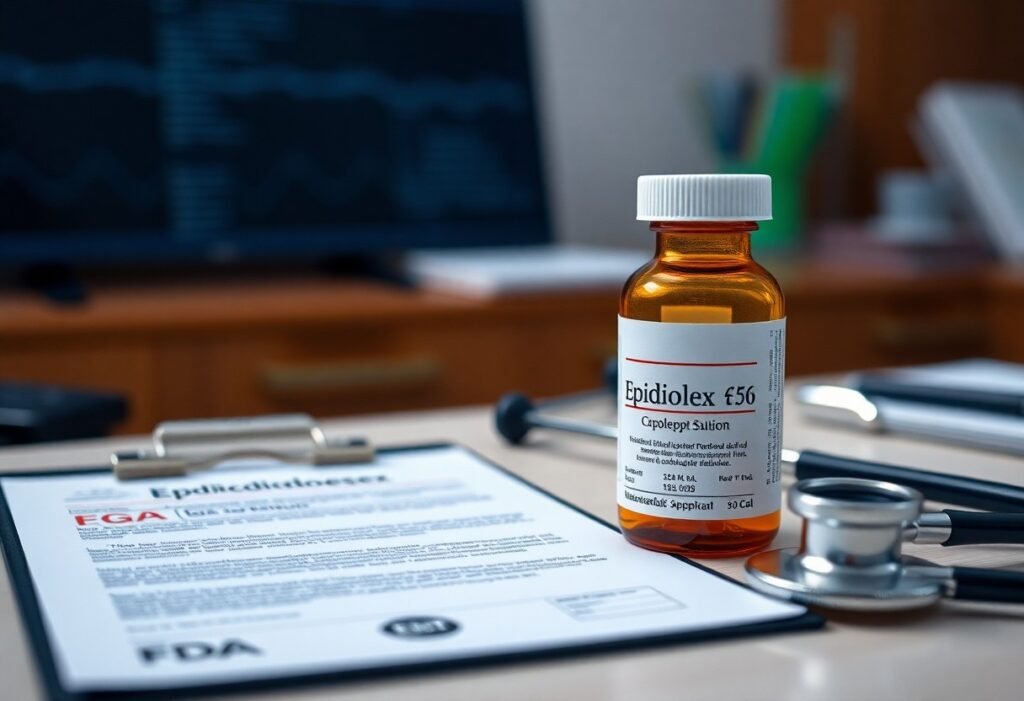
Epidiolex’s 2018 FDA approval marked the first time a cannabis-derived drug gained federal recognition for treating rare seizure disorders. You now have a legally sanctioned option backed by randomized trials showing measurable reductions in seizure frequency among children with Dravet and Lennox-Gastaut syndromes. This milestone shifted regulatory perceptions, setting a precedent for cannabinoid-based pharmaceuticals within mainstream medicine.
Therapeutic Potential for the Mind
Clinical interest has expanded to anxiety and PTSD, where early trials suggest CBD may modulate fear responses in the amygdala. You might observe reduced subjective anxiety in patients during public speaking tasks, with neuroimaging showing altered activity in prefrontal regions linked to emotional regulation. These findings, while preliminary, open pathways for non-psychoactive interventions in mental health.
A mid-sized SaaS firm conducting digital mental health trials reported participants using CBD alongside cognitive behavioral therapy showed improved adherence and self-reported calm. Your understanding of CBD’s role in psychiatric care grows as researchers isolate its anxiolytic effects from sedation, focusing on dose-dependent responses in generalized anxiety models.
The Modern Industrial Renaissance
The Farm Bill and the Market Explosion
The 2018 Farm Bill removed hemp from the list of controlled substances, reclassifying it as an agricultural commodity. This shift opened the door for widespread cultivation and commercialization across the United States. You now see CBD in products ranging from tinctures to pet treats, with availability expanding into grocery stores and online marketplaces. A mid-sized SaaS firm tracking supplement sales noted a tenfold increase in CBD product listings within two years of the bill’s passage.
Quality Control and the Global Future
Regulatory gaps have allowed inconsistent labeling and variable potency in many CBD products on the market. You may encounter items with significantly more or less CBD than advertised, and some contain trace THC due to poor extraction practices. The World Health Organization has urged member states to adopt uniform testing standards, especially as exports grow from countries like Canada and Switzerland.
Independent labs now offer certificate-of-analysis services that verify cannabinoid content and screen for contaminants. You can access these reports via QR codes on reputable brands, creating a transparent supply chain from soil to shelf. As the European Union advances its novel foods regulation for CBD, manufacturers must adapt formulations and documentation to meet evolving requirements, shaping a more accountable global market.
Summing up
You now understand that CBD’s journey spans millennia, from ancient herbal applications to precise molecular science. A compound once lost to prohibition has reemerged through rigorous study, with documented use in managing certain seizure disorders and ongoing exploration in inflammation and anxiety.
You see its legitimacy not in hype but in peer-reviewed trials, regulatory approvals like Epidiolex, and the cautious integration into medical practice. The story continues as researchers at institutions worldwide examine its full pharmacological profile, ensuring each claim is grounded in reproducible evidence.