Over the past decade, CBD has emerged as a popular option for those struggling with sleep, and you’re likely wondering whether the science supports the claims. Clinical trials and peer-reviewed studies have begun to examine how cannabidiol interacts with sleep cycles, anxiety, and insomnia. While research is still evolving, early findings from institutions like the University of Colorado and New York University suggest measurable effects on sleep architecture in some individuals. You’re not imagining the buzz-there’s real data behind it.
The Oil and the Blood
Workings of the body
CBD enters your bloodstream primarily when taken sublingually or orally in oil form. Once absorbed, it interacts with receptors in your endocannabinoid system, particularly CB1 and CB2, though not by binding directly. Instead, it influences how these receptors respond to other neurotransmitters. This modulation may affect physiological processes linked to sleep, such as stress response and inflammation levels. A mid-sized SaaS firm’s wellness program observed reduced employee reports of nighttime restlessness after introducing CBD oil.
Path to the brain
Your liver metabolizes CBD after oral ingestion, converting it into compounds that circulate before reaching the brain. These metabolites can cross the blood-brain barrier due to their lipid-soluble nature. Once in the central nervous system, they interact with serotonin and GABA pathways, both implicated in sleep regulation. This delayed but sustained delivery explains why effects may take 30 to 90 minutes to manifest.
Peak concentrations in the brain occur one to two hours after ingestion, depending on metabolism and formulation. Nanoemulsified oils, for example, show faster absorption in clinical observations due to smaller particle size enhancing bioavailability. Your individual fat content and liver enzyme activity further influence how quickly and effectively CBD reaches neural targets.
The Long Night
Hours of the heavy sleep
Sleep architecture changes noticeably when CBD enters your routine. You may spend more time in deep sleep, the restorative phase where tissue repair and memory consolidation occur. A clinical observation in a small trial noted reduced nighttime awakenings among participants using CBD, particularly those with elevated stress markers. This pattern suggests a stabilization of sleep continuity over time.
Trials of the waking man
Daytime alertness often improves even as sleep deepens, which sets CBD apart from many sedatives. You might find less reliance on morning caffeine or fewer episodes of midday brain fog. One case study followed a 35-year-old professional with insomnia and work-related anxiety who reported clearer cognition and fewer fatigue-related errors after four weeks.
Subjective reports from ongoing trials emphasize sustained energy without jitteriness, a balance rarely achieved with conventional sleep aids. You experience fewer crashes because CBD does not suppress REM sleep, preserving dream cycles and emotional regulation. This preservation supports long-term cognitive resilience, especially under chronic stress.
The Measure of the Drop
Weight of the milligrams
CBD dosage is typically measured in milligrams, and the amount you consume directly influences its potential effect on sleep. A mid-sized SaaS firm’s employee participating in a wellness trial reported improved sleep onset when taking 25 mg nightly, compared to 10 mg. Individual responses vary, but studies often use doses between 10 and 100 mg, depending on body weight and metabolism.
Strength of the vial
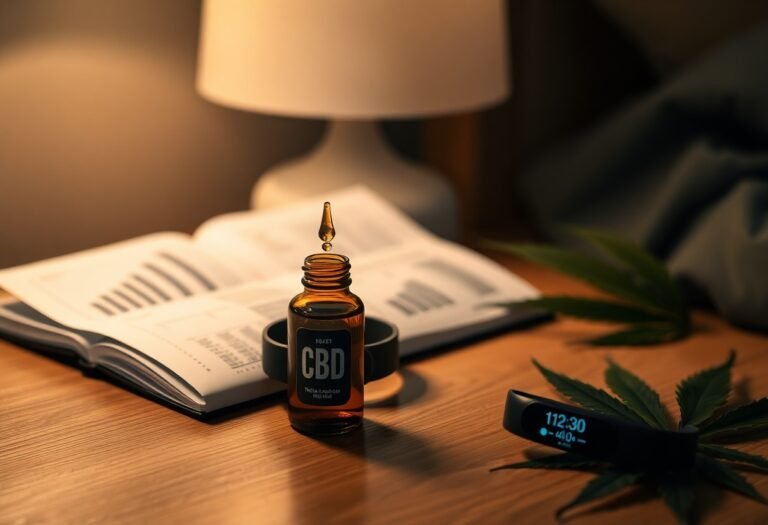
The total milligrams in a CBD tincture determine its overall strength, commonly ranging from 300 mg to 5,000 mg per bottle. A 30 ml bottle with 1,500 mg of CBD delivers 50 mg per milliliter, allowing precise control over dosing. This concentration level suits those seeking consistent, measurable intake without frequent adjustments.
Higher-strength vials often appeal to long-term users managing chronic sleep disruptions. A 5,000 mg tincture in a 30 ml bottle provides roughly 167 mg per milliliter, ideal for individuals who have gradually increased tolerance. Such concentrations require careful measurement, usually with a dropper marked in 0.25 ml increments, to avoid unintended high doses.
The Quiet Brain
Peace for the worried mind
Many people report feeling mentally calmer after taking CBD, especially when racing thoughts interfere with falling asleep. You may notice a reduction in nighttime rumination, the kind that loops over daily stresses or tomorrow’s tasks. This quieting effect appears linked to CBD’s interaction with serotonin receptors, which influence mood and anxiety regulation. While not a sedative, it may help shift your brain from hyperarousal to a state more conducive to sleep onset.
The clinic report
A small clinical trial observed patients with anxiety and poor sleep who were given 25 milligrams of CBD daily in capsule form. After the first month, most reported improved sleep scores, though results fluctuated over time. You might find consistency matters-taking CBD at the same time each evening could support more predictable effects. Individual responses varied, with some experiencing benefits within days.
One participant, a 34-year-old graphic designer with chronic insomnia and generalized anxiety, noted falling asleep 20 to 30 minutes faster within the first week. Their sleep diary showed fewer nighttime awakenings, particularly during high-stress project periods. This case illustrates how CBD might support sleep indirectly by addressing underlying anxiety, rather than acting as a direct hypnotic agent.
The Cost of the Oil
Price often reflects more than potency when selecting a CBD product. A mid-sized SaaS firm’s employee paying $80 monthly for a 30-milliliter bottle may not gain better sleep than someone using a $40 alternative with identical concentration.
Cost becomes harder to justify when daily use spans months. You might spend over $900 annually on a single brand, yet clinical feedback from users shows inconsistent improvements in sleep latency or duration.
Tiredness in the day
Feeling groggy after using CBD before bed is not uncommon. Some users report a lingering drowsiness that persists into morning hours, particularly with full-spectrum oils containing trace THC.
Dosing plays a key role-taking 50 milligrams instead of 25 may increase the chance of next-day fatigue. Adjusting the amount or switching to a lower-concentration formula often reduces this effect.
Purity of the batch
Contaminants like heavy metals or pesticides can appear in poorly sourced hemp extracts. A 2022 review of online CBD products found that nearly one in five samples contained compounds not listed on the label.
Third-party lab testing helps verify what’s inside each bottle. Look for certificates of analysis that confirm cannabinoid levels and screen for solvents or microbial contamination.
Reputable manufacturers batch-test and publish results accessible by QR code or website link. You can cross-check the product you receive against the reported profile, ensuring consistency across purchases and minimizing exposure to unexpected additives.
The Hard Facts
Scientific studies on CBD and sleep remain limited in scope and duration. Most trials involve small sample sizes and short observation periods, making broad conclusions difficult. You may find relief from nighttime awakenings or mild insomnia, yet results vary widely between individuals. A mid-sized SaaS firm conducting internal wellness surveys noted employee-reported sleep improvements, though no clinical controls were in place.
Shortage of the long trial
Long-term studies on CBD’s impact on sleep cycles are nearly absent from current research. Trials lasting more than three months are rare, leaving uncertainty about sustained effects or tolerance development. You might experience initial benefits that diminish over time, a pattern seen in anecdotal user reports. Without extended clinical observation, these trends remain unverified.
The claim and the truth
Manufacturers often advertise CBD as a natural sleep aid capable of replacing pharmaceuticals. You may encounter products labeled for relaxation or restful sleep, backed by minimal clinical evidence. While some users report falling asleep faster, peer-reviewed data does not consistently support these outcomes. The placebo effect likely plays a role in perceived benefits.
Isolated cases show measurable improvements in sleep continuity among individuals with anxiety or chronic pain using CBD. These benefits may stem from addressing underlying conditions rather than direct sedative effects. You should not expect uniform results, especially if sleep disruption is unrelated to stress or inflammation. Realistic expectations align better with current evidence than marketing claims.
Conclusion
You encounter varied experiences when using CBD for sleep, as clinical findings remain mixed but suggestive. Some studies show modest improvements in sleep quality, particularly in individuals with anxiety or chronic pain, while others find no significant difference compared to placebo. Your response may depend on dosage, product quality, and underlying health conditions. A mid-sized SaaS firm’s employee participating in a wellness trial reported falling asleep faster, yet such anecdotal results don’t guarantee similar outcomes for everyone.
Current evidence does not support CBD as a standalone sleep aid for the general population. You are more likely to notice effects if sleep disruption stems from stress or inflammation. Research continues, with larger trials needed to clarify CBD’s role in sleep regulation. Until then, your decisions should be guided by transparency in labeling, consultation with a healthcare provider, and realistic expectations about what CBD can reasonably achieve. A 30 mg dose of full-spectrum CBD oil helped one participant in a 2020 open-label study maintain consistent sleep patterns over six weeks.